

Tanzania brings together the very best of East Africa: the continent's most famous wildlife parks, Africa's highest mountain and an archipelago of turquoise waters. You can't see it all in one trip, which raises the real question: what are the best things to do in Tanzania when you only have two or three weeks?
Our guides live and work at the foot of Kilimanjaro. Here is their selection of the 10 experiences that are truly worth the journey, each with the best time to go and how long to plan.
Things to do in Tanzania, in short
The top things to do in Tanzania are: a Serengeti safari and the Great Migration, the Ngorongoro Crater, a Kilimanjaro climb, the beaches of Zanzibar and Stone Town, the elephants of Tarangire, meeting the Hadzabe and Maasai, a hot-air balloon flight, the Materuni waterfalls near Moshi and the wild southern parks. Allow 10 to 15 days to combine a safari and Zanzibar.
Go on safari in the Serengeti and see the Great Migration
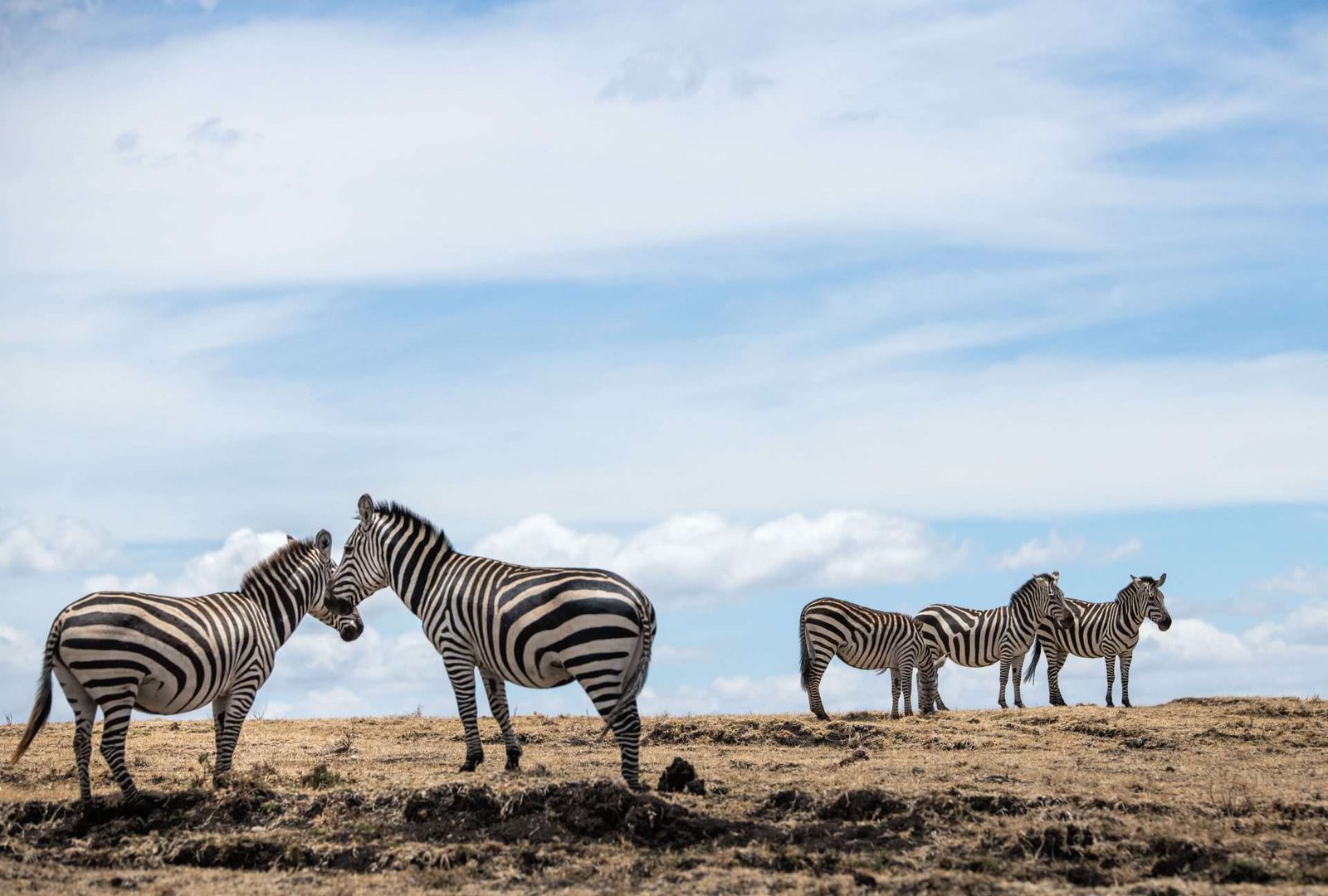
The Serengeti is the savannah as you imagine it: endless plains, lions on the kopjes and, every year, hundreds of thousands of wildebeest and zebras following the rains. A UNESCO World Heritage Site, it is the number-one experience of any trip to Tanzania.
- Region
- Northern Tanzania
- Best time
- Year-round; the migration moves with the months
- Recommended stay
- 2 to 3 nights
Our tip: In January and February, the migration is in the south of the park for the calving season. From July to October, it moves north for the Mara River crossings.
Read our Great Migration guideDescend into the Ngorongoro Crater
This huge caldera, about 20 km across and part of a UNESCO World Heritage Site, holds one of the highest concentrations of wildlife in Africa. It is one of the few places where you can see the Big Five in a single day, including the black rhino.
- Region
- North, between Karatu and the Serengeti
- Best time
- Year-round
- Recommended stay
- 1 day
Our tip: Go down at sunrise, before the other vehicles arrive, and bring a jacket: the crater rim is chilly in the morning.
Climb Kilimanjaro, the Roof of Africa
At 5,895 metres, Kilimanjaro is Africa's highest peak, a UNESCO World Heritage Site, and one of the few that can be climbed without mountaineering skills. The climb crosses rainforest, moorland and alpine desert before sunrise at Uhuru Peak.
- Start
- Moshi
- Best time
- January to March, June to October
- Recommended stay
- 6 to 8 days
Our tip: Choose a route of at least 7 days, such as the Machame or Lemosho routes. More time to acclimatise means a better chance of reaching the summit.
Things to do in Moshi, the gateway to KilimanjaroRelax on the beaches of Zanzibar
White sand, turquoise lagoons and coral reefs: Zanzibar is the perfect way to end a trip after a safari. In the north, Nungwi and Kendwa offer swimming at any time of day, while in the east, Paje and Jambiani are a kitesurfing paradise.
- Access
- Short flight from Arusha or Kilimanjaro
- Best time
- June to October, December to February
- Recommended stay
- 3 to 5 nights
Our tip: Don't miss Jozani Forest, the island's only national park, to see the Zanzibar red colobus, a monkey found nowhere else.
Get lost in the alleys of Stone Town
Zanzibar's historic heart, listed by UNESCO, blends Swahili, Arab, Indian and European influences. Carved doors, spice markets and sunset over the harbour: half a day is not enough.
- Region
- Zanzibar, west coast
- Best time
- Year-round
- Recommended stay
- 1 to 2 days
Our tip: Combine your visit with a spice farm, and try the street food stalls of Forodhani Gardens in the evening.
10 Tanzanian dishes you must tryWatch the elephants of Tarangire National Park
Less famous than the Serengeti, Tarangire is a favourite of many travellers: large elephant herds, ancient baobabs and a river that draws wildlife in the dry season. It is also one of the closest parks to Arusha, ideal to start a safari.
- Region
- North, 2 hours from Arusha
- Best time
- June to October
- Recommended stay
- 1 day or 1 night
Meet the Hadzabe and the Maasai
Around Lake Eyasi live the Hadzabe, one of Africa's last hunter-gatherer peoples, whose click language is unique in the world. Going out to hunt and gather with them at dawn is a rare experience. Further north, the semi-nomadic Maasai open the doors of their villages between Ngorongoro and Kilimanjaro.
- Region
- Lake Eyasi, Ngorongoro area
- Best time
- Year-round
- Recommended stay
- 1 day
Our tip: Choose visits organised with the communities, so that your visit benefits them directly. Always ask before taking a photo.
Fly over the Serengeti in a hot-air balloon
Take off at dawn and watch the savannah wake up beneath you: a balloon flight is the ultimate bucket-list experience. It usually ends with a breakfast served in the bush. We book flights with our partner Miracle Experience.
- Region
- Serengeti
- Best time
- Year-round, dry season ideal
- Recommended stay
- One morning
Our tip: Places are limited in high season, so book at the same time as your safari.
Visit the Materuni waterfalls and the coffee trail
On the slopes of Kilimanjaro, near Moshi, the Chagga village of Materuni hides a spectacular waterfall at the end of a beautiful hike. The day ends with a coffee experience: from picking to roasting, all the way to your cup.
- Start
- Moshi
- Best time
- Year-round
- Recommended stay
- 1 day
Our tip: It is the ideal activity for the day before or after a Kilimanjaro climb.
Discover all our ideas around MoshiExplore the wild southern parks: Nyerere and Ruaha
For a safari far from the crowds, southern Tanzania is a revelation. Nyerere National Park can also be explored by boat on the Rufiji River, while vast and remote Ruaha is famous for its elephants and big predators.
- Access
- Flight from Dar es Salaam or Zanzibar
- Best time
- June to October
- Recommended stay
- 3 to 4 nights
How to combine these experiences
Every trip we organise is tailor-made. Here are three formats to give you an idea, which we adapt to your dates and wishes.
Travelling with children? Read our family safari guide. And before you go, check the new mandatory travel insurance.
Useful official links
Trusted sources to plan your trip.
- UNESCOSerengeti National ParkThe World Heritage listing.
- UNESCONgorongoro Conservation AreaThe World Heritage listing.
- UNESCOKilimanjaro National ParkThe World Heritage listing.
- UNESCOStone Town of ZanzibarThe World Heritage listing.
- ParksTanzania National Parks (TANAPA)Official park information and fees.
- VisaOfficial Tanzania e-visaThe only official portal for your visa.
Things to do in Tanzania: FAQ
What is the best time to visit Tanzania?
The dry season, from June to October, is ideal for safaris and Kilimanjaro. January and February are also excellent, with the calving season in the southern Serengeti. However, the long rains from March to May are best avoided if possible.
How many days do you need in Tanzania?
Allow 7 days for a safari in the northern parks, 10 to 15 days to combine a safari with Zanzibar's beaches, and one more week if you add a Kilimanjaro climb.
Do I need a visa for Tanzania?
Yes, most travellers, including British, American and European citizens, need a visa. The easiest option is the official e-visa, applied for online before departure. In addition, since 1 October 2026, a mandatory inbound travel insurance of USD 44 per adult is required.
Can you combine Kilimanjaro, a safari and Zanzibar?
Yes, it is the most complete trip. Start with the climb from Moshi, continue with a safari in the northern parks, then take a short flight to Zanzibar to relax.
What is the number one thing to do in Tanzania?
A safari in the Serengeti, ideally combined with the Ngorongoro Crater, is the experience most travellers come for. Then, a hot-air balloon flight or a Kilimanjaro climb are the ultimate add-ons.
